Reflections on a Blue Tsunami
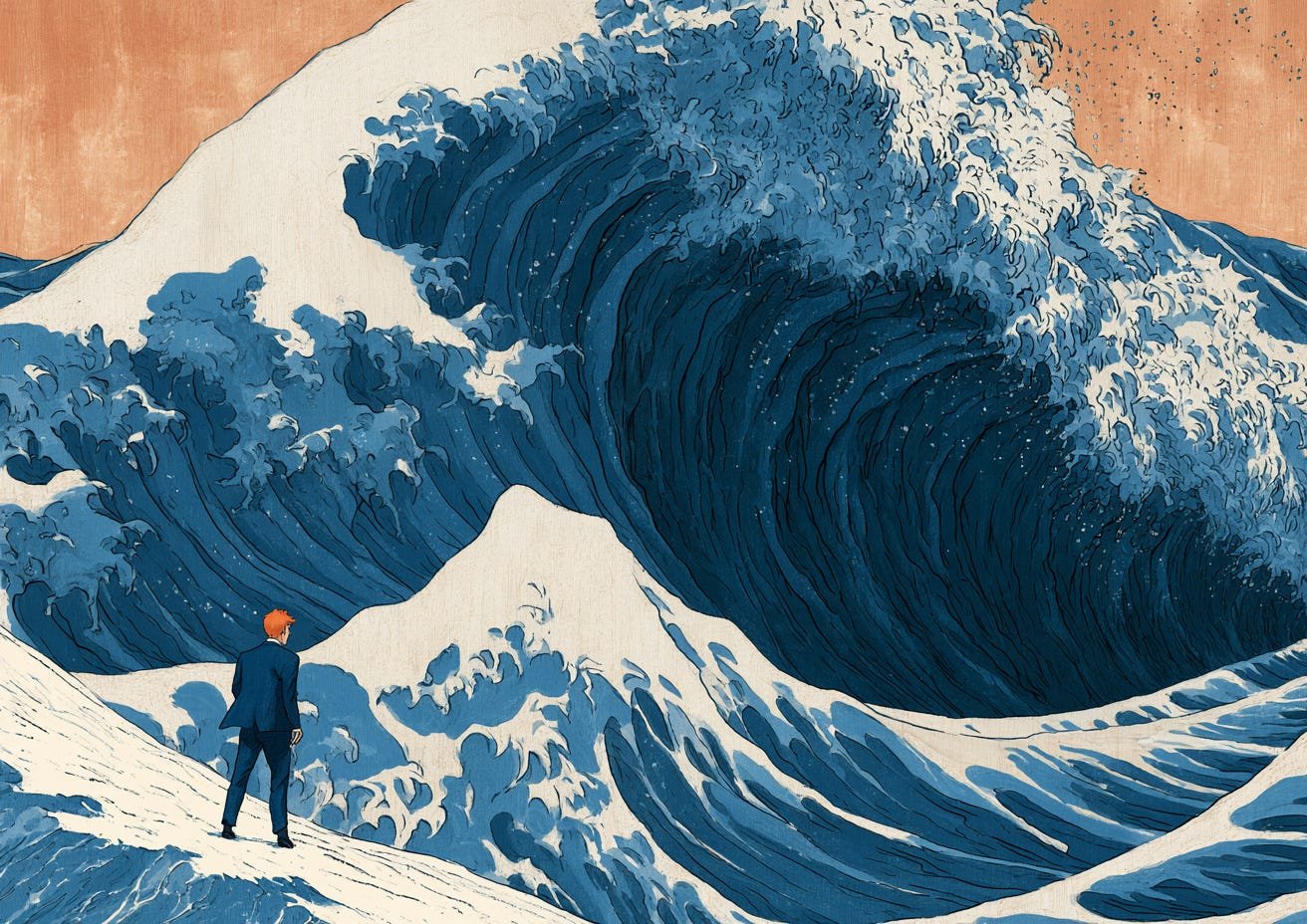
I posted this on Facebook six years ago, in 2020, just after Americans went to the polls to choose between Donald Trump and Joe Biden for president:
We still don’t know who won this election, but one thing is clear. The United States lost it.
Regardless of the result, it will remain divided, and its future is uncertain as ever. The electorate did not have the sense to deliver the resounding repudiation of Trump and his policies—racist, vulgar, sexist and selfish as they were—as the world had hoped.
Even assuming Biden wins, four years from now, another Trump can still win and undo whatever gains might have been achieved. US commitments over that period then will not be credible because the next leader can unilaterally abrogate them, as Trump so easily did with Iran and the Paris Accord. This has profound implications for massive problems that we face as a human race, and that require multilateral cooperation—from international peace to fair trade to climate change.
Biden did end up winning that year, and I took no pleasure in being proven right four years later, when not just another Trump, but Trump 2.0, retook the presidency.
The damage Trump has done since — to the United States and to the world — in just the first two years of his second term has been incalculable and tragic. We cannot look at the crises around us without seeing his fingerprints on them: the weakening of international institutions, the growing difficulty of coordinating a response to climate change and AI, and the erosion of the trust that makes cooperation possible.
The turmoils in France, the Middle East, Ukraine and elsewhere, while rooted in long histories, have all worsened because of him.
And so it is as well with many of the problems we have here in the Philippines. To be sure, much of our political and economic mess is self-inflicted by corruption, poor governance and incompetence.
But we can also clearly see that Trump’s ego and authoritarian tendencies have resulted in unilateral tariffs, unjust wars, and volatile oil prices and exchange rates that are now playing havoc with inflation and the lives of ordinary Filipinos.
That is why today’s election result feels like such a bright spot.
The scale of the Democrats’ victory is historic. It is a clear rebuke to Trump and it gives Democrats a clear mandate to oppose his agenda and investigate his administration. They can block legislation and nominees, will likely begin impeachment proceedings, and make it impossible for the White House to govern as if there were no limits.
Perhaps sanity is finally returning to the United States.
Perhaps.
I am reluctant to get too excited.
An election can change the balance of power. What it cannot do, by itself, is repair the damage that has been done, settle the divisions that helped produce Trump, or guarantee that the US will not turn back in the other direction come next elections.
I suspect Democrats will spend much of the next two years holding Trump to account, as they should. But this also means that they will have little time and political energy for the larger issues facing the rest of us: climate change, AI, international security and peac, and the future of the institutions built to help countries work together.
The Democrats also now have a broader slate of possible presidential candidates. But no one has yet emerged as an obvious standard-bearer. There is the risk then that, as 2028 draws closer, the ambitious presidentiables among them will turn on one another and squander the momentum they have just built.
For those of us outside the US looking in, the conclusion is therefore inescapable: we still cannot trust the US, and we are still on our own.
Trump is expected to come to the Philippines in a few weeks for the ASEAN summit. Our government has been working toward a Pax Silica framework agreement with the United States, and its signing has been targeted for this month.
I am against entering into the deal right now, but not because I am necessarily against Pax Silica.
My problem is that we still know too little about what it contains, and how it will affect us. There are promises and projections, and little else. We should not rush into an agreement on the basis of motherhood statements, simply because it is being presented as an opportunity.
Pax Silica may well do more good than harm. But the reverse is also possible. We need to understand what we are agreeing to, who stands to benefit, what the costs and risks are, and whether the terms protect Philippine interests over the long term.
Again, the question of TRUST looms large. Even if the agreement is sound, can we be confident that the next US president will honor it?
This is the lesson that Trump has demonstrated and embodied all this time: a president can shamelessly overturn commitments, withdraw from agreements and unsettle alliances with remarkable speed.
In other words, the midterm results give us reason for hope, but they do not erase the uncertainty that my 2020 post was about. The United States may be moving in a better direction today. Whether it can stay on that path — and whether the rest of the world can afford to count on it — remains an open question.
Finally, there is another question I’m thinking about: Can we do the same here in the Philippines in 2028? Is there enough anger and disgust with the status quo — the shameless corruption, the dynastic hold on political office, the gross incompetence of high profile officials and appointees — that our electorate might similarly throw out our trapos?
The anger is certainly there.
Unfortunately, anger by itself does not always translate into change.
I think we are too divided, scattered, and exhausted. And our trapos are remarkably good at surviving public disgust. They switch alliances at the drop of a dime (or maleta), and present themselves as the solution to the very problems they helped create.
There is also the question of who replaces them. It is not enough to want the old names gone. Voters need credible alternatives — candidates with the organization, resources and credibility to compete, and with a clear idea of what they would do differently.
Whether we can turn our present anger into something more durable than flashes of rejection or outrage remains to be seen.
I want to — I have to — believe that we can. At this point, I am not confident that we will.