My Reflection on EDSA, 40 Years After
“We’ll enter that sweet period where everyone agrees not to repeat the recent horrors. Of course, we’re fickle stupid beings, with poor memories and a great gift for self-destruction. Although who knows? Maybe this time, we’ll learn.”
--- From Plutarch Heavensbee’s letter to Katniss in “The Hunger Games”
February 20, 2026
Those of us who were in EDSA know that “sweet period” very well.And now, forty years later, we cannot deny Plutarch’s warning about lofty expectations, and the disappointment of having failed, it seems, to live up to EDSA’s promises. Poor memories and the capacity for self-destruction, indeed.
It is a lesson that is nothing new... and perhaps if we had heeded it, we might not have set our hopes so high. Literature, after all, is littered with similar warnings.
For example, in 1946, George Orwell wrote Animal Farm, a novella that tells the story of a group of farm animals who overthrow their human owner in the hope of creating a fair and equal society.
George Orwell’s tale, like Plutarch’s letter, could serve as an allegory about EDSA and the Philippines.Animal Farm begins with Old Major, a respected boar, who gathers the animals to describe a dream of freedom: animals should live without human masters, sharing the fruits of their labor equally.
Shortly after his death, the animals, led by two pigs Snowball and Napoleon revolt and drive the farmer, Mr. Jones, off the farm. They rename it “Animal Farm” and establish seven commandments based on equality, the most important being: “All animals are equal.”
At first, the farm thrives. The pigs (so apt!) take on leadership roles, claiming they are the smartest animals, and therefore best suited to make decisions.
Conflict, however, eventually grows between and among the leader pigs. One day, Napoleon, with the help of trained dogs, drives Snowball away and takes full control. He abolishes meetings and rules by fear, propaganda, and violence. His minions rewrite history and twist language to justify Napoleon’s actions.
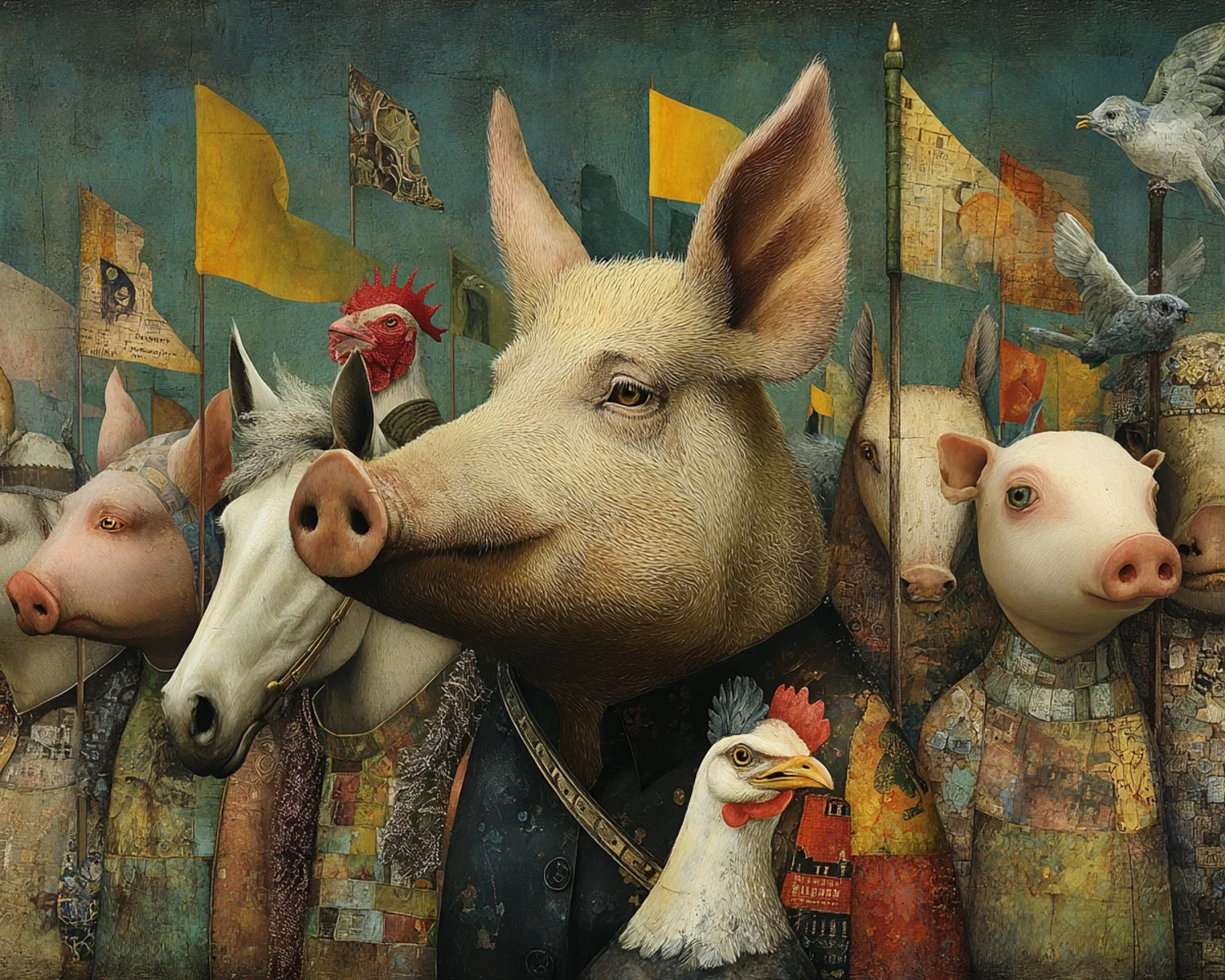
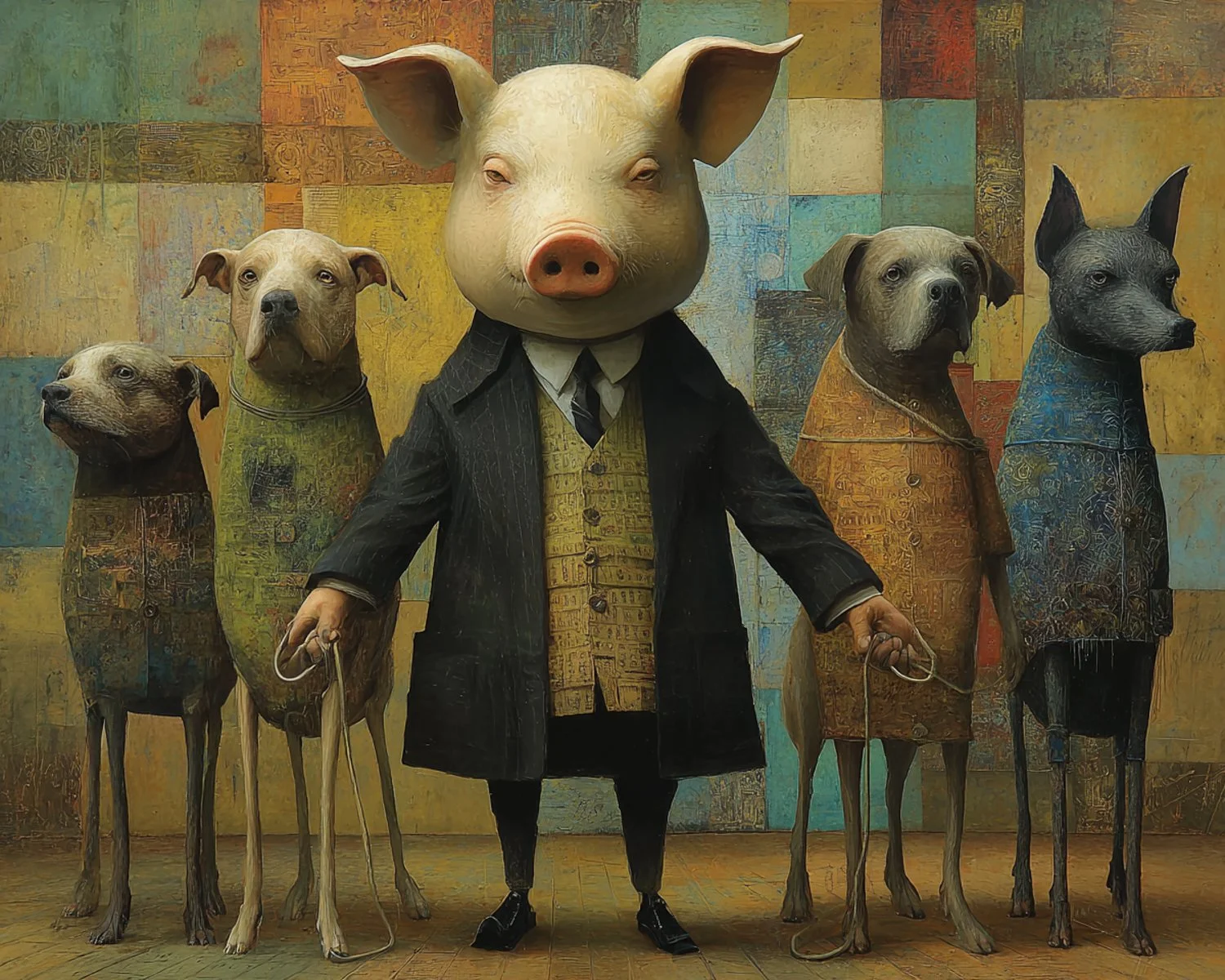
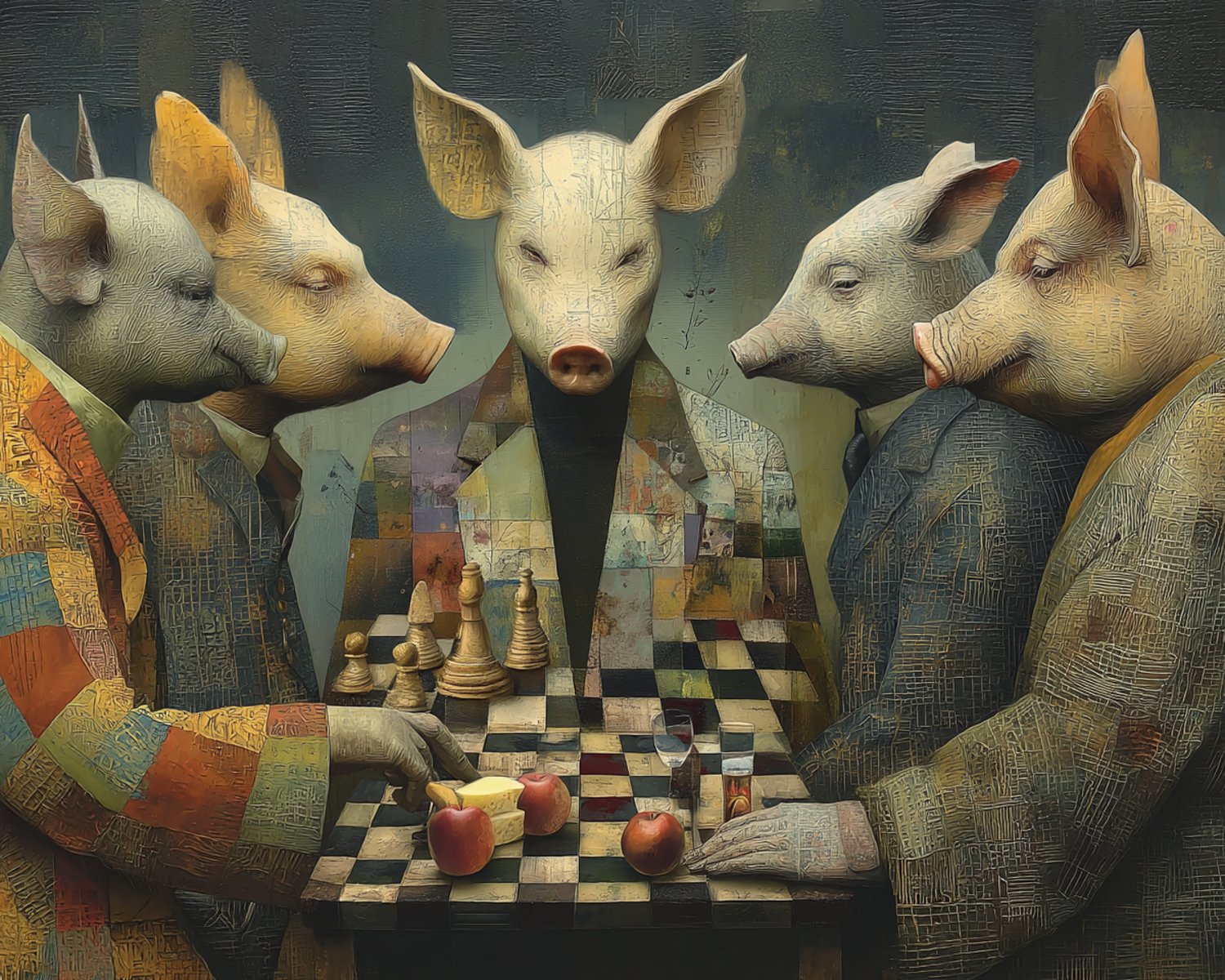
The remaining pigs slowly and gradually break the commandments, all the while insisting nothing has changed. They take the good food for themselves, sleep in beds, drink alcohol, and trade with humans (gasp!), each time quietly altering the rules to justify their actions.
Years pass. The other animals grow poorer, hungrier, and more confused. The original commandments have been reduced to one: “All animals are equal, but some animals are more equal than others.”
In the end, the pigs begin walking on two legs and openly socialize with humans. When the other animals look from pig to man and back again, they can no longer tell the difference.
The revolution meant to end oppression, but greed and corruption only recreated it.
EDSA was our “Old Major” moment. It was a dream lived and seemingly achieved in those four incredible days forty years ago. We gathered on a highway and believed — truly believed — that we were resetting the rules.
And for a while, it felt like we had. The dictator was gone. The world was singing our praises. We even inspired similar revolutions Korea (1987), Myanmar (1988) among other countries, culminating with the fall of the Iron Curtain in 1989.
Like in Animal Farm, we trusted that the new leaders would be different simply because they were not the old ones. We assumed that removing a strongman automatically produced strong institutions.
But, just like the tale, ideals began to fade, not in one dramatic sweep, but in corners cut, “small” favors given, and in compromises that our leaders said were necessary.
Eventually, family dynasties learned to twist the spirit if not the words of the Constitution and reemerged, more shameless and entrenched as ever.
Memory thinned. Despite a law mandating it, we still do not have a proper museum dedicated to preserving the memory of the abuses of martial law. No permanent, public space where the facts are laid out plainly — names, dates, scars, choices — so that forgetting becomes harder than remembering.
And when memory has no house, it becomes myth. It softens at the edges precisely because myths are easier to argue with than records. So the hard lessons of how and why EDSA happened — what it cost, what it prevented — faded into something vague and sentimental, and certainly not something that future generations could also take pride in.
Now, it seems that EDSA is only a trite tale told once a year. A hashtag, rather than something embedded in our culture.
The harder question isn’t whether EDSA failed. It’s whether we even understood what it required.
We told ourselves: Never Again. But “never again” is not a spell. It’s high maintenance work.
Revolutions are dramatic; governance is dull. Crowds are powerful; systems are tedious. Democracy isn’t achieved by a one-time uprising no matter how glorious. It’s a habit. And habits, as we all know, are much easier to break than to create.
The problem isn’t that we hoped. The problem is that we stopped guarding and fighting for what we hoped for.
Still, the lesson of EDSA should not be cynicism, and its rebirth is not necessarily impossible. But it does require continued, dedicated and committed vigilance.
Forty years and counting, EDSA still gives us a choice.
We can keep shaking our heads at where we now are, keep posting our frustrations on social media (#NeverAgain), and keep saying “sinayang natin” and “what happened?”
Or we can decide that EDSA was not just a moment we were lucky enough to witness — but a responsibility we must continue to carry.
Either way, one fact is inescapable. EDSA was not the finish line. It’s not four days on the highway with flowers and prayers. It’s years and years of showing up. Of doing the right thing even when no one is watching. Of choosing not to cheat even when everyone else seems to be getting away with it.
Mistakenly, too, we keep searching for heroes. Someone strong, brilliant, incorruptible will rise up and fix things.
Good, moral leaders are needed of course. But they will never be enough. And the search, if not obsession with seeking them is dangerous because it gives all of us an excuse to avoid looking at a mirror.
And maybe part of the problem is that we are squeamish. We whisper about wrongdoing instead of naming it. We convince ourselves that corruption is always committed by monsters somewhere far away, when the uncomfortable truth is that it often wears a familiar face.
The corrupt and the cruel do not arrive with horns. They sit at our tables. They are in our group chats. I will bet that almost every one of us knows — personally — someone who has cut corners, abused power, or benefited shamelessly from a broken system. And yet most of us don’t call them out because of a misplaced sense of “pakikisama” or “utang na loob”.
Democracy cannot survive if we protect relationships more fiercely than we protect principles.
What we really need are ordinary people — you and me — to simply decide to be decent. Consistently. Quietly. Even when it’s inconvenient, and even when no one is looking.
For my part — together with my co-conspirators at CANVAS — we’ve cast our lot with children. With children’s rights, children’s welfare, and most especially literacy.
I write this not to give ourselves a pat in the back, or to lift our own benches, because really, how big a pat do we deserve? We’ve been doing this for 20 years and where is the country now? Still in a literacy crisis that will take at least a decade to resolve.
And that assumes that whoever sits on the chairs of power in the coming years will continue the plan set forth by EDCOM 2, regardless of the politics of his or her predecessor.
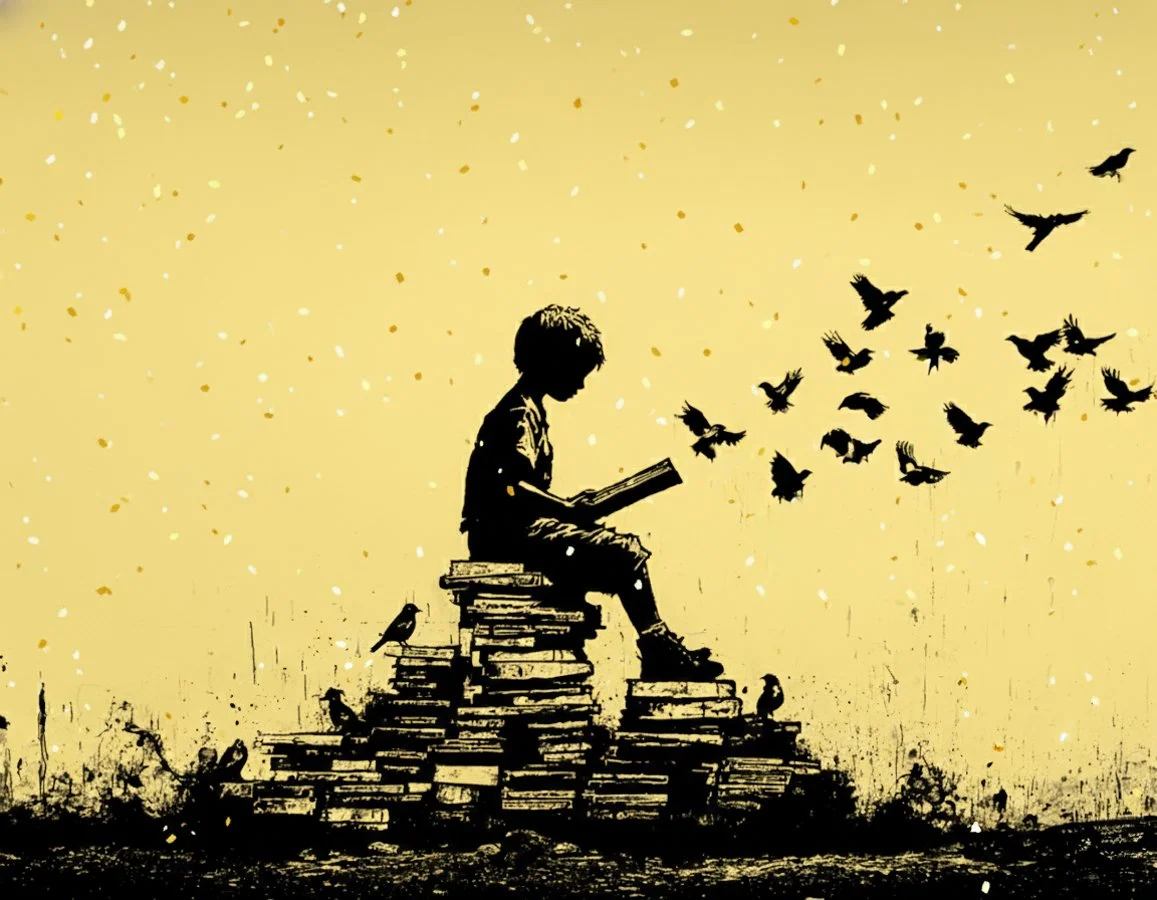
Nevertheless, we continue to strive if only for the belief that if there is any long revolution worth fighting, it is the revolution inside a child who learns to read.
A child who reads learns to question.
A child who questions is harder to fool.
A citizen who is harder to fool is harder to rule by fear, by propaganda, or by historical revisionism.
That is how we choose to honor EDSA.
And there are so many other ways to contribute. The contribution doesn’t have to be grand. It just has to be real.
It can be as simple as doing our work honestly. Paying people fairly. Refusing to spread lies. Teaching well. Creating something beautiful. Raising our children to value truth, kindness and integrity.
The artist who paints for a cause. The lawyer who defends the powerless. The teacher who teaches as if the republic depends on it. The business owner who pays fair wages.
And here’s something we don’t say enough: service can even be joyful. If you find that one small thing you’re good at — that thing that feels natural to you, and offer it for the common good, I promise — it won’t feel like sacrifice all the time. It will feel meaningful and right.
So as we celebrate (yes, that’s the correct word) this milestone year post-EDSA, maybe that’s where we should see ourselves.
Not waiting for another dramatic moment. Not expecting a perfect leader. Just deciding, in our own small circles, to act as if freedom matters — because it does. To act as if honesty still counts — because it does. To act as if the future is worth the effort — because our children are.
If we still believe, as we should, that EDSA meant something, then perhaps the most radical thing we can do is simple: Act like it did.