Bach, A.I. and Me
July 8, 2026
I’m in Leipzig now, for reasons I wrote about previously.
We’re here only for a couple of days. Based on my research, it would benefit us greatly to visit the Spinnerei — a vast former cotton mill that has organically evolved into a thriving ecosystem of galleries, artist studios, workshops, and cultural spaces — and, if we still have time and energy, the Grassi Museum, which is supposed to have excellent exhibitions on design, craft, decorative arts, and material culture.
Beyond that, I didn’t really know what to expect.
Leipzig was really just a stop before Kassel, where we have a meeting with the folks at the Brothers Grimm Museum.
It also happens to sit somewhere between Berlin and Kassel (though not in a straight line), and when I casually asked ChatGPT whether it was worth spending a couple of days here, it replied:
“Leipzig is more relaxed and livable than Berlin, and remains deeply artistic and intellectual. Its mix of industrial history, canals, studios, and cafés makes it especially interesting.”
It also recommended both the Spinnerei and the Grassi Museum.
Good enough for me. The train ride from Berlin took only a little over an hour, so we arrived around lunchtime with the entire afternoon free.
The city immediately felt different.
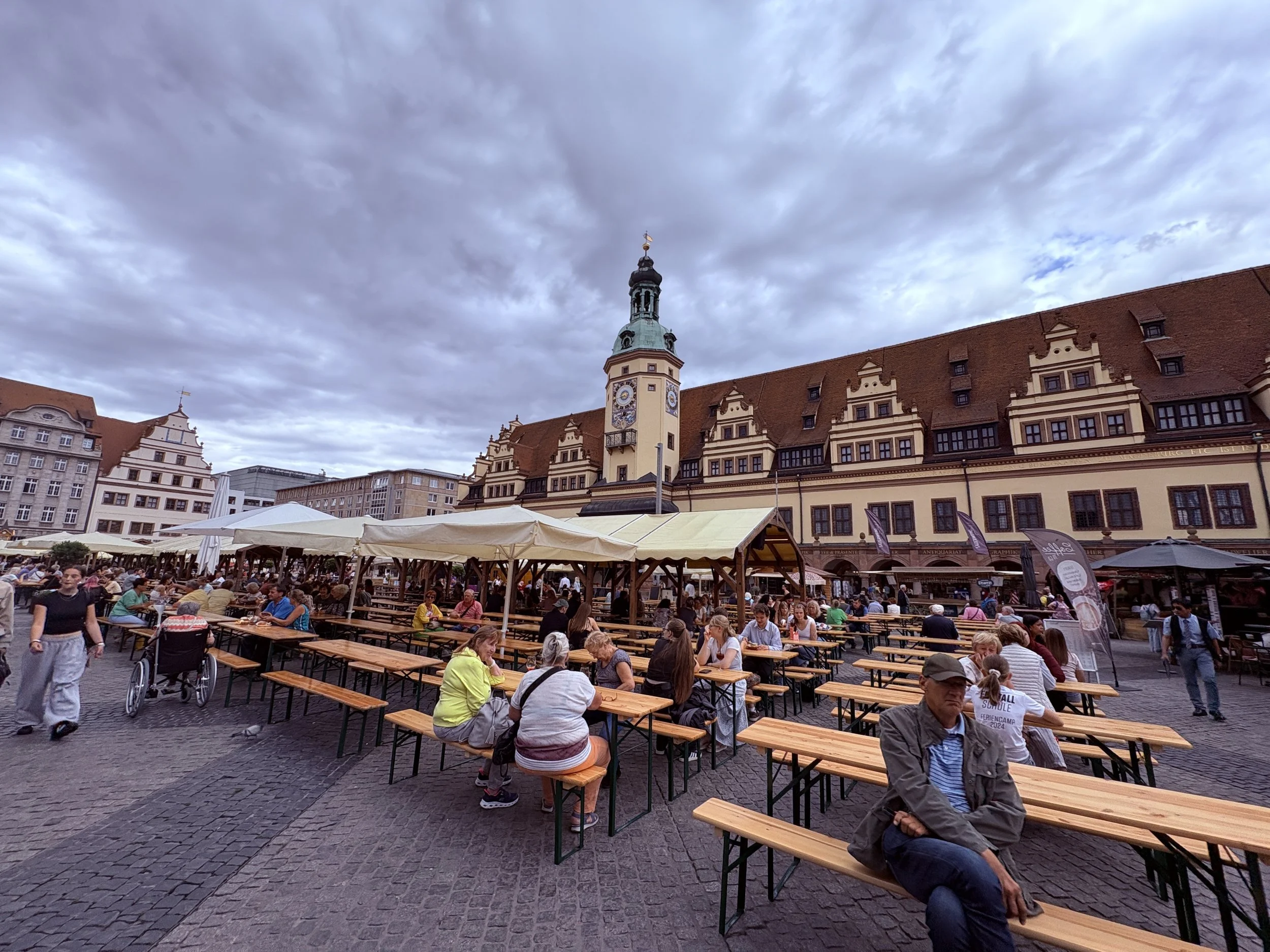
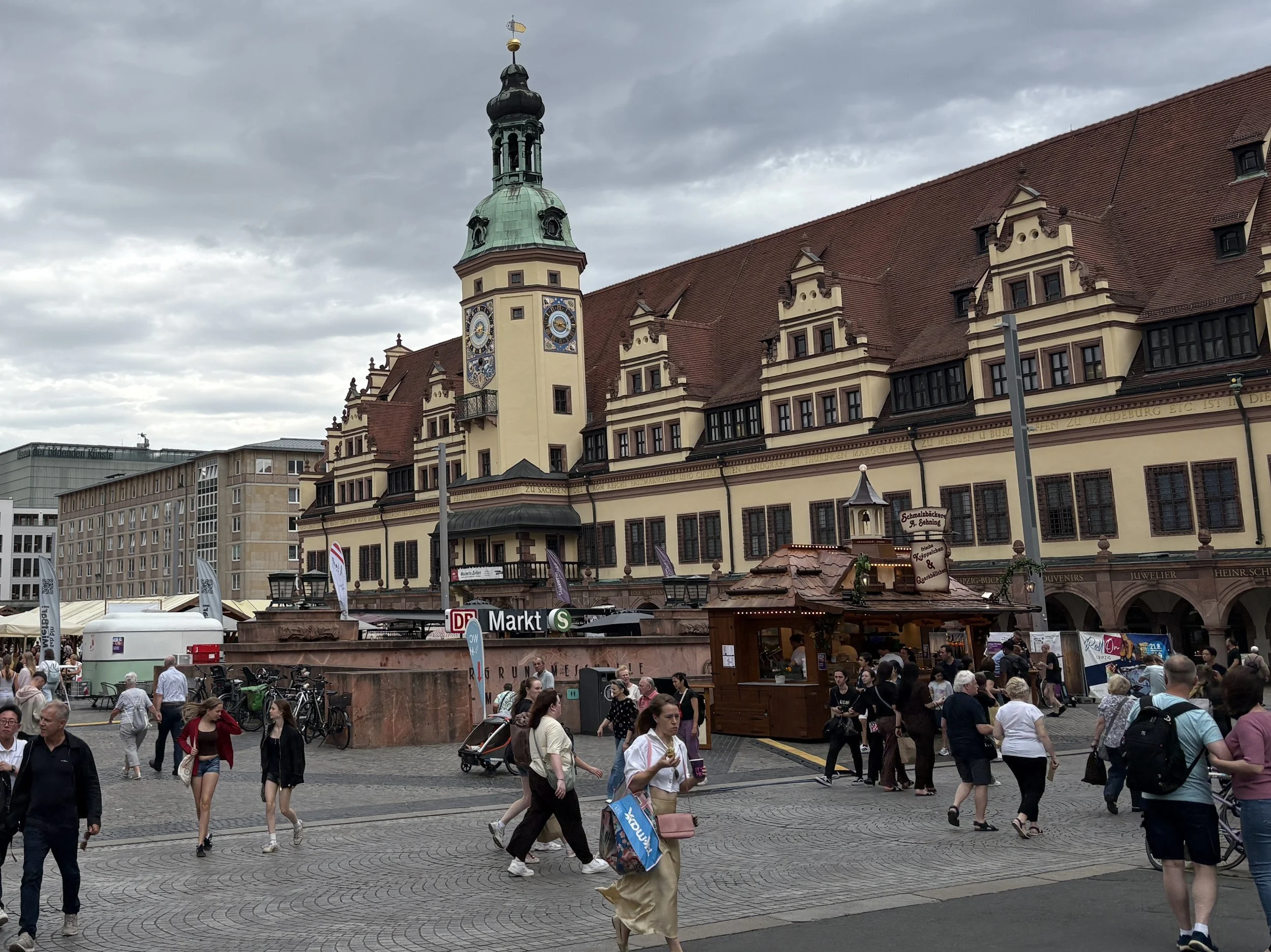
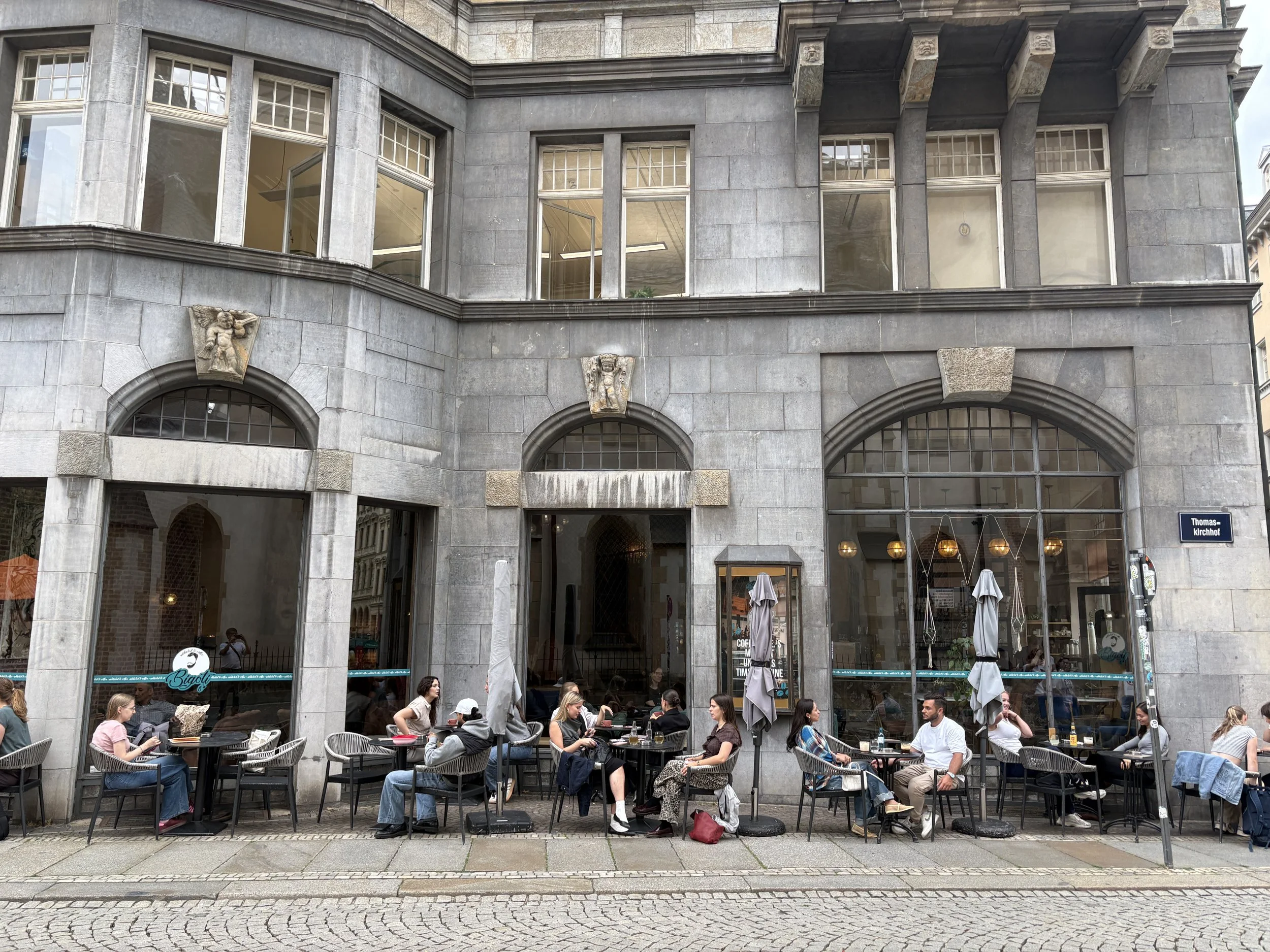
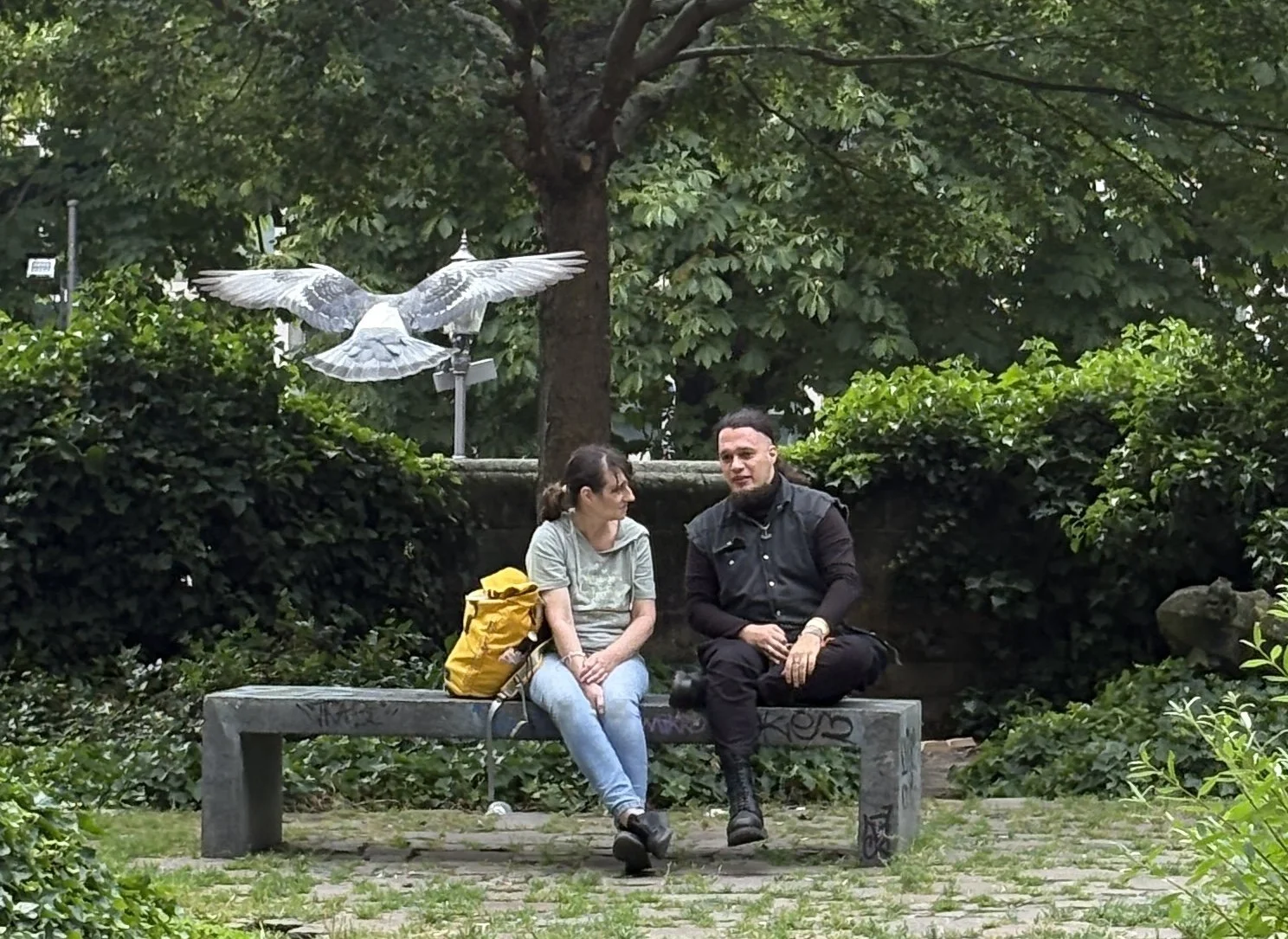
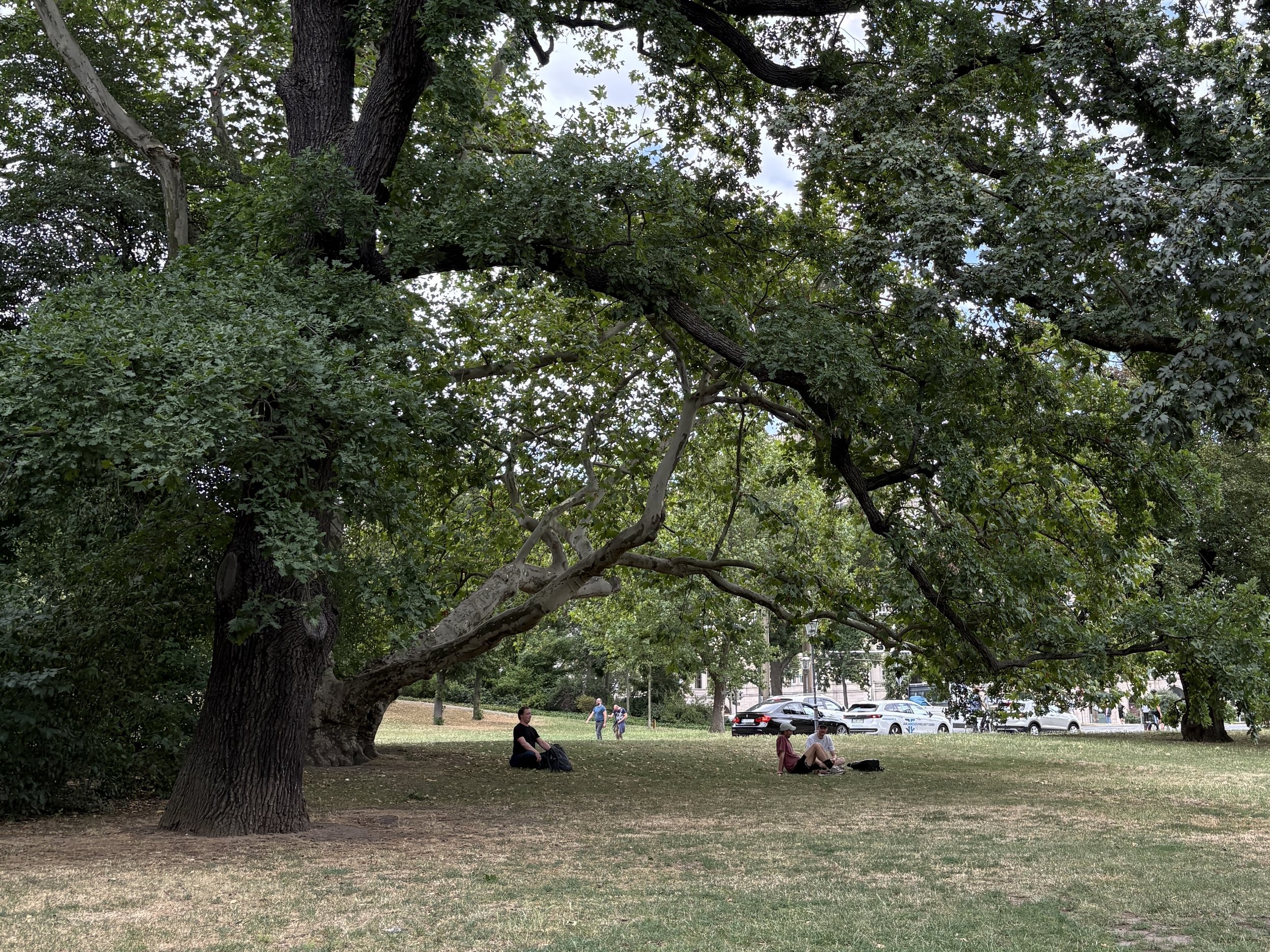
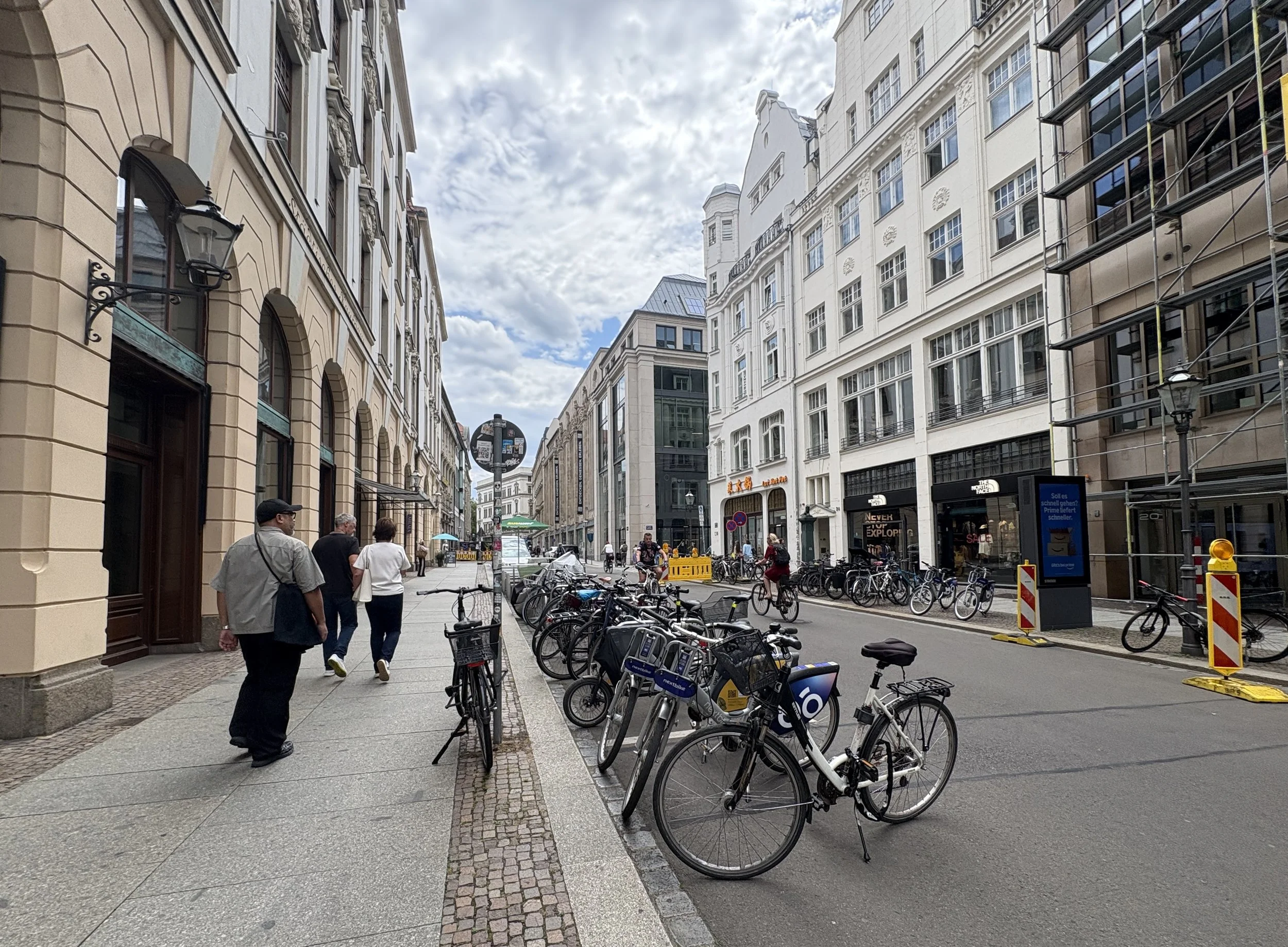
Compared to the neighborhood where we stayed in Berlin, Leipzig felt more livable. It was more abuzz with quiet activity, and there seemed to be more independent shops and cafés within walking distance. The weather cooperated too — cloudy but bright, with a cool breeze that made wandering around quite pleasant. Everywhere we looked, people were walking, talking, sipping coffee or wine outdoors.
It had a very relaxed and pedestrian-friendly feel.
So we walked aimlessly.
Eventually we came upon this large building that looked like a church. We had absolutely no idea what it was. It certainly looked old, although these days you never really know. Maybe it was actually a modern building designed to look medieval.
I told J, “Let’s test ChatGPT.”
I took a photo and asked, “I am in Leipzig. Can you tell me what this is?”
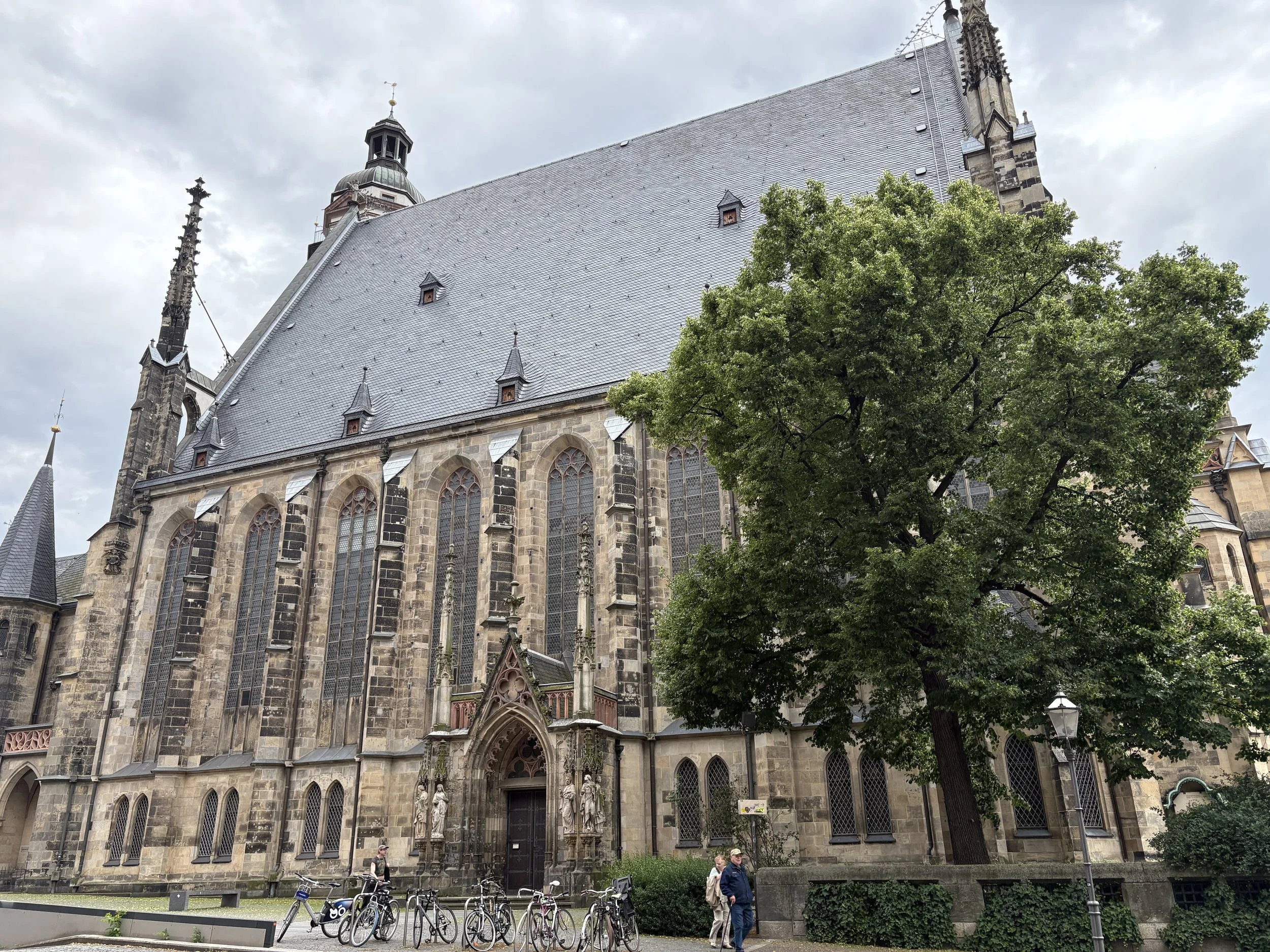
Almost immediately it replied:
“Yes. This is almost certainly the St. Thomas Church (Thomaskirche), one of Leipzig’s most famous landmarks.”
It continued:
“A few reasons it’s so important:
Johann Sebastian Bach spent the last 27 years of his life in Leipzig as the church’s cantor (1723–1750).
Bach is buried inside the church, in front of the chancel. His remains were moved here in 1950.
It is home to the world-renowned St. Thomas Choir (Thomanerchor), one of the oldest boys’ choirs in the world, founded in 1212. Bach himself directed this choir.
The present Gothic church was largely built in the late 15th century, although a church has stood on this site since the 12th century.
From your photo, you’re standing along the south side of the church, which is why you’re seeing the long row of tall Gothic windows and the steep slate roof rather than the famous front tower.”
I was almost embarrassed that I even had to ask.
Bach has always been one of my favorite composers, behind only Mozart and Georg Philipp Telemann. He wrote one of my favorite pieces of music, Air on a G String.
One would have thought that, having planned to visit Leipzig, I would already have known about St. Thomas Church. Instead, we stumbled upon it completely by accident.
Had it not been for AI, I might never have realized what we were actually looking at.
We found our way to the other side, and went inside.
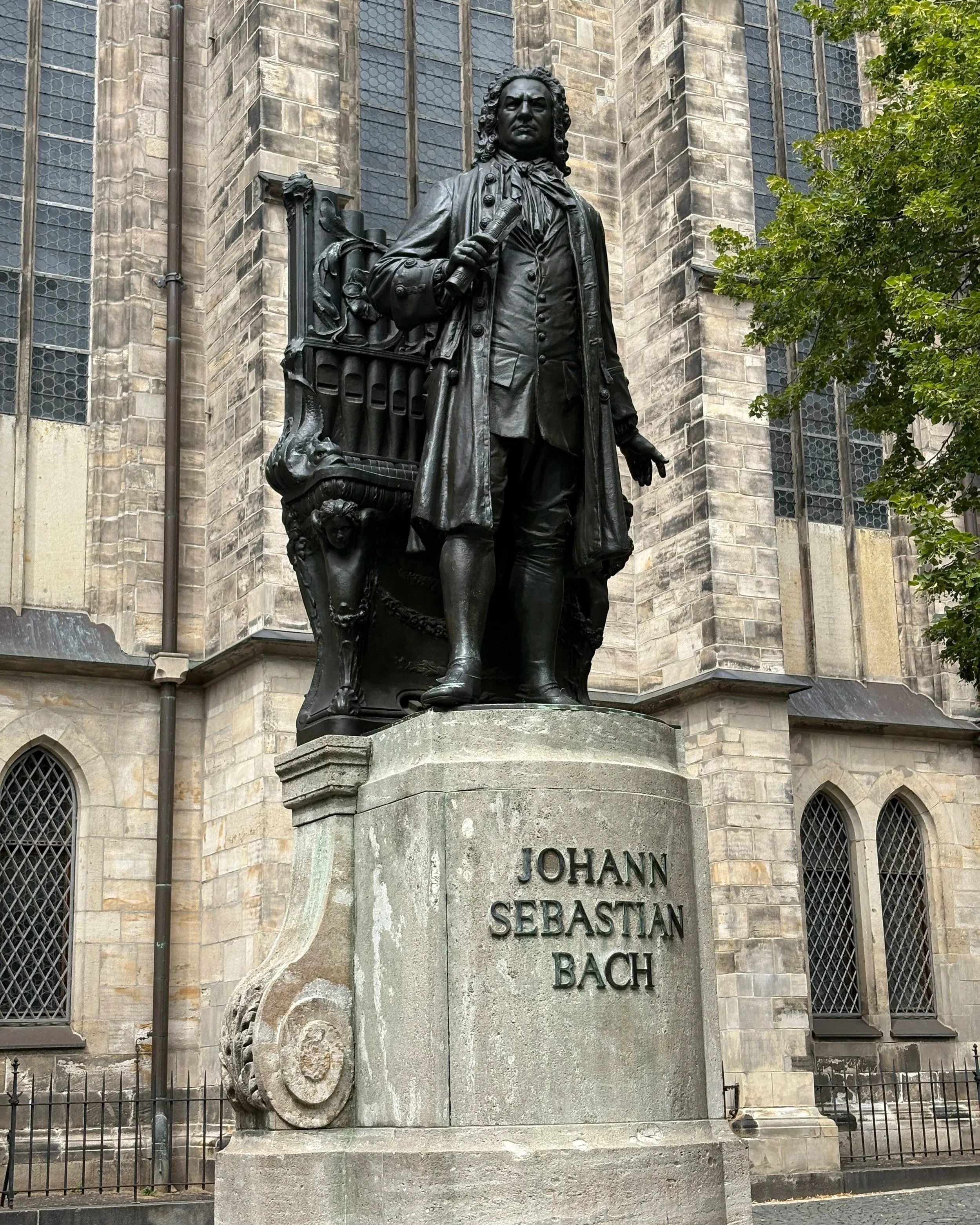
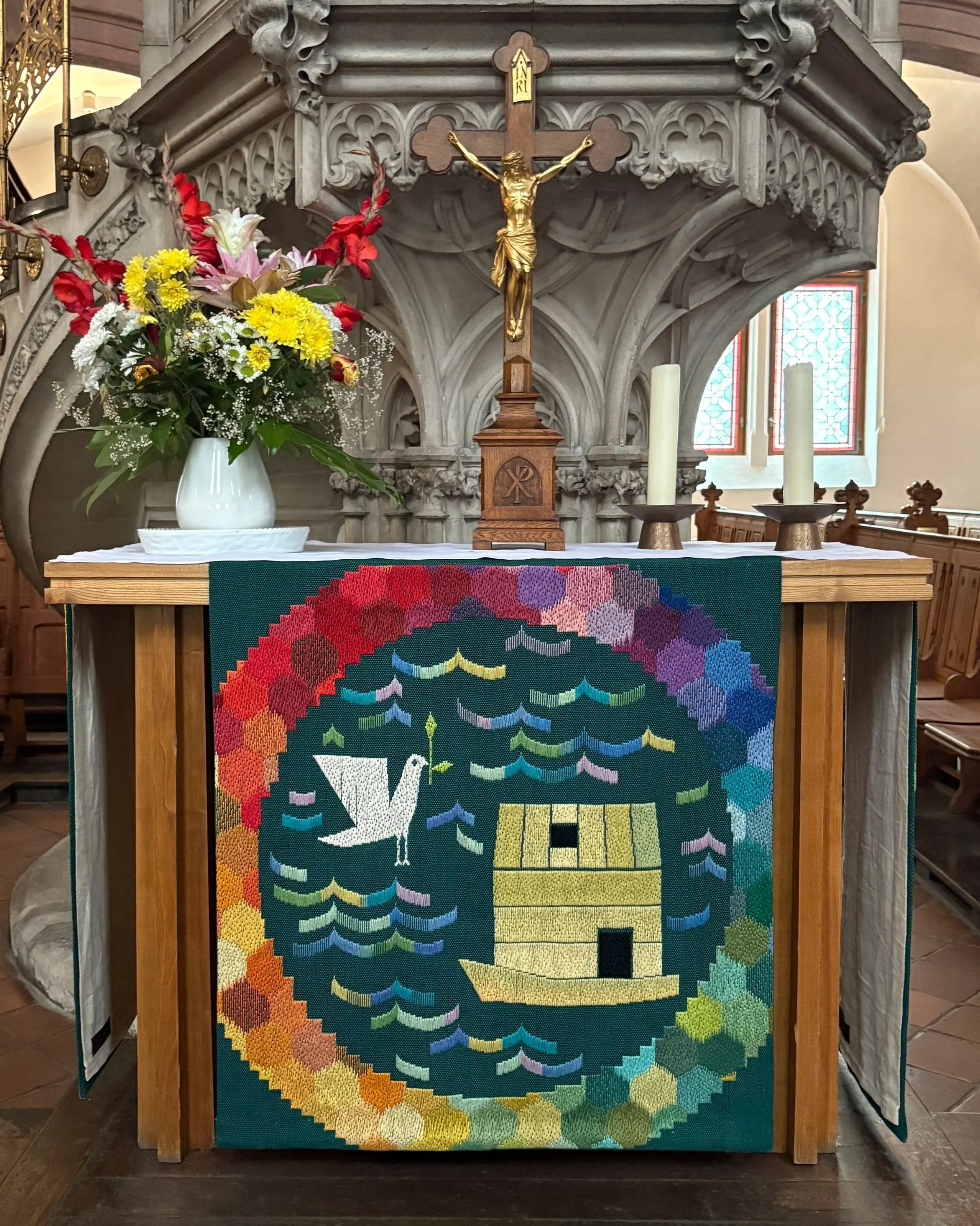
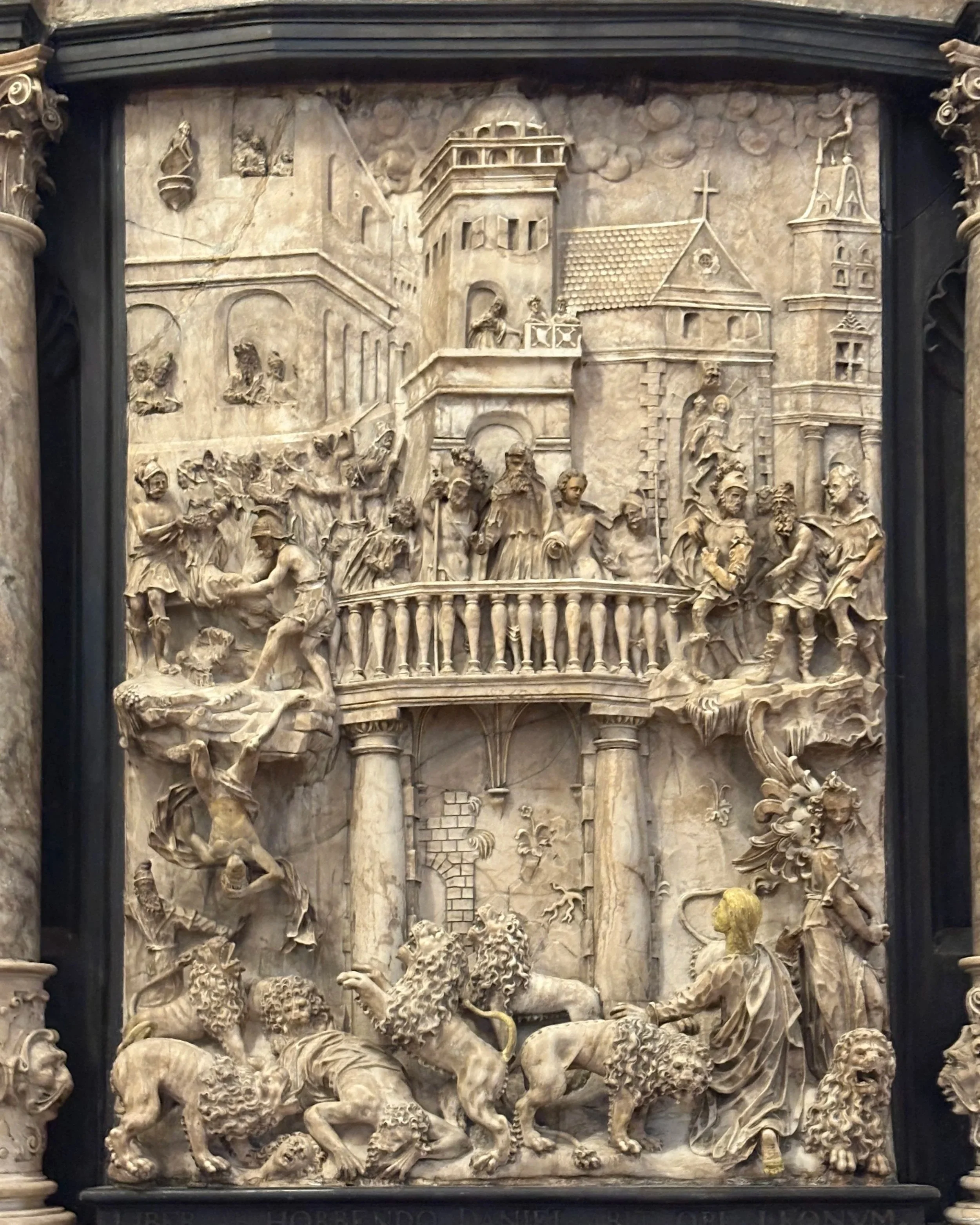
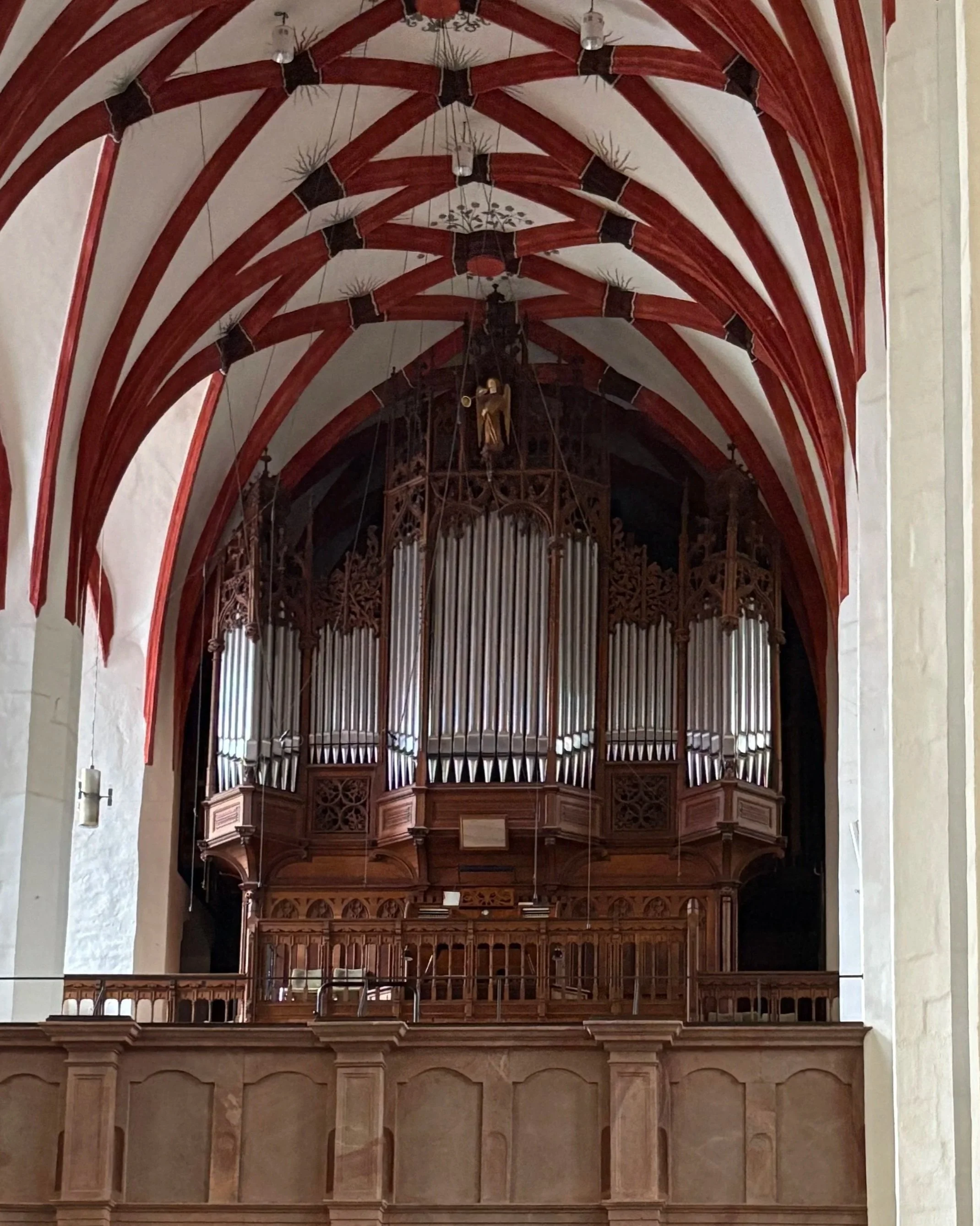
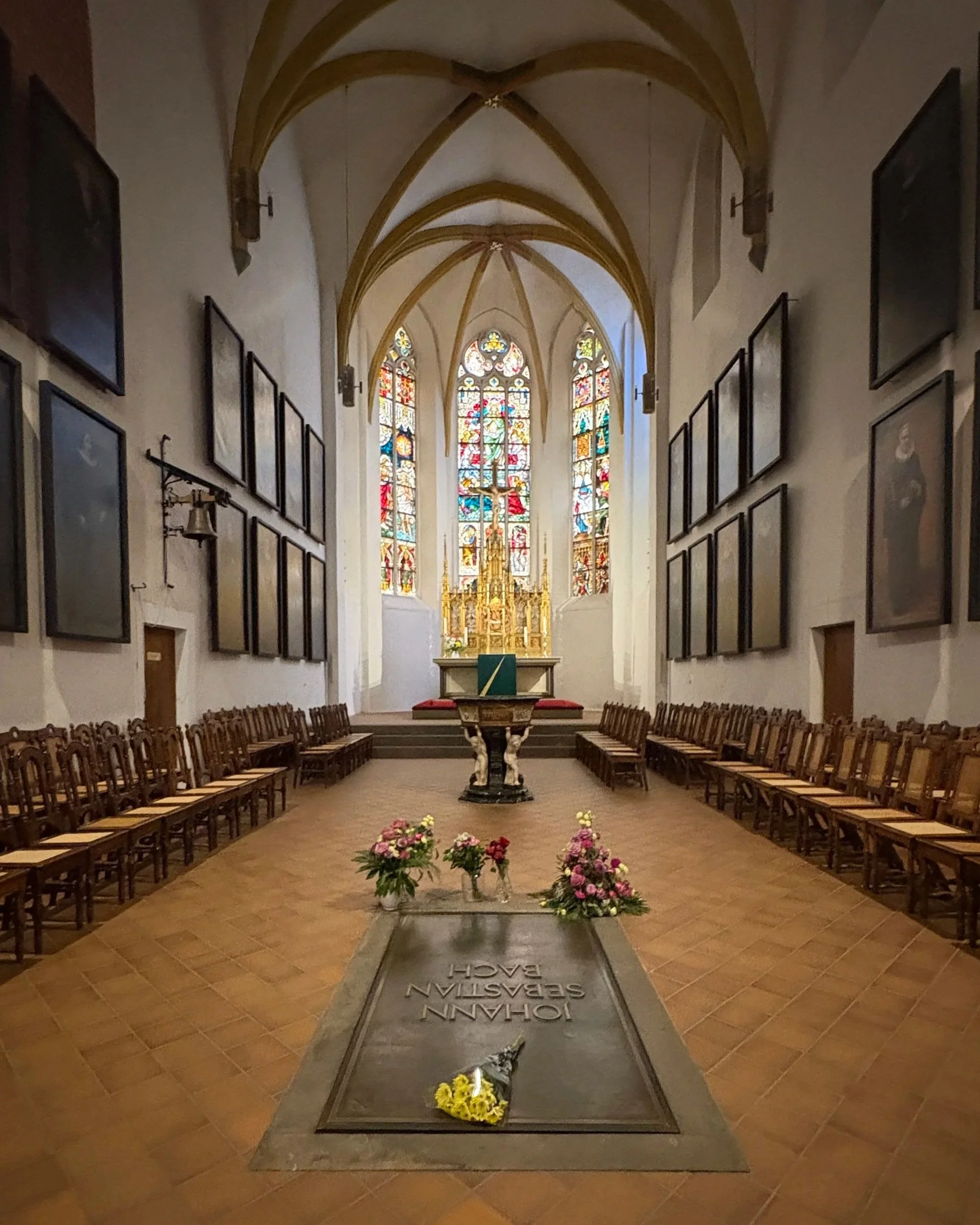
I paid my respects and, as I always do whenever I enter a church for the very first time, quietly made my three wishes — a completely baseless superstition I learned as a child that every first visit to a church comes with three wishes.
On our way out, we noticed a small exhibit.
Once again, ChatGPT became our guide.
I pointed my phone at what looked like an ancient book and asked, “What does this say?”
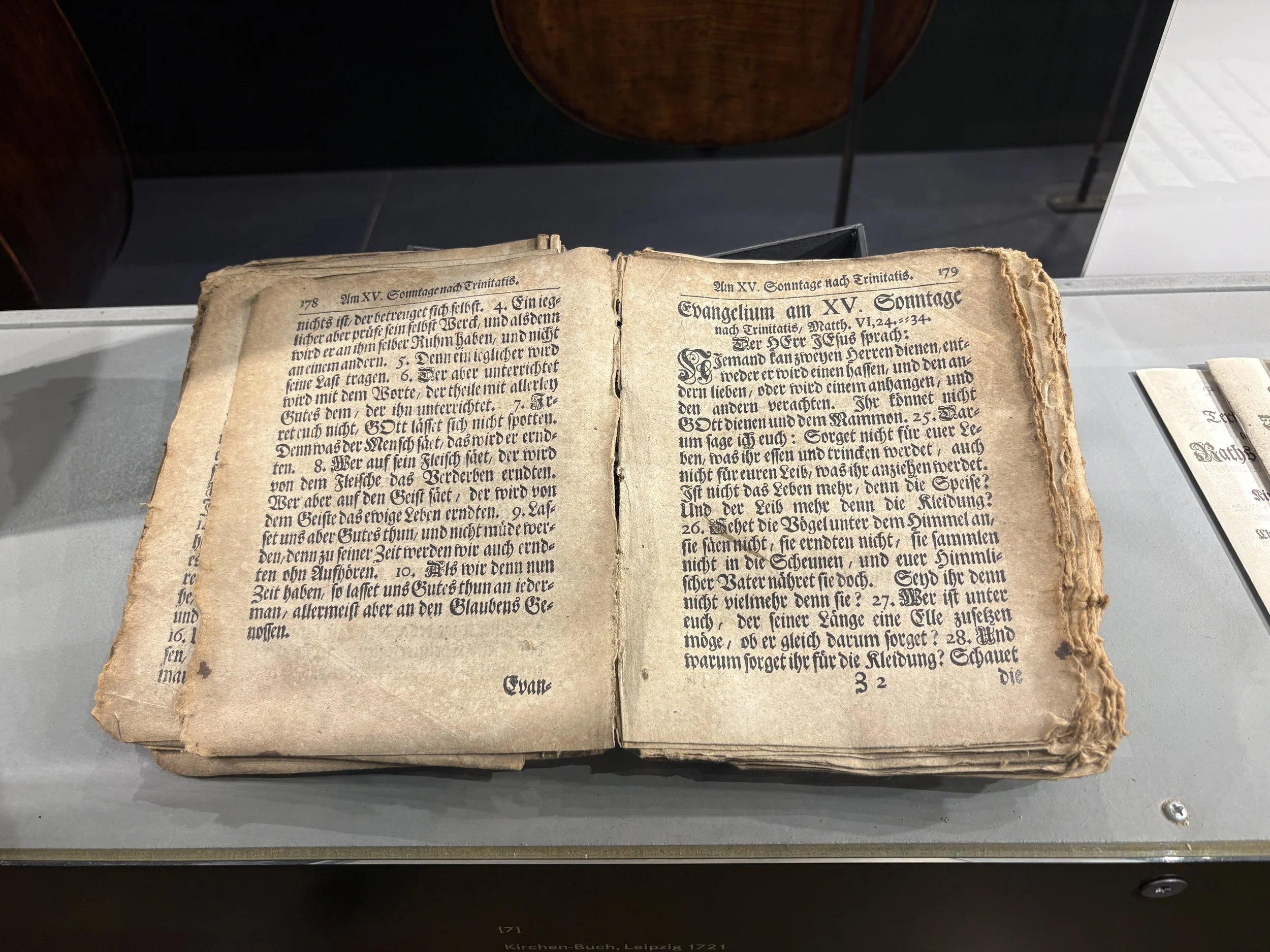
It explained that it was an old German church lectionary (Kirchen-Buch). The open pages were for the Fifteenth Sunday after Trinity and contained Matthew 6:24–34 from the Sermon on the Mount, beginning with the well-known passage:
“No one can serve two masters... You cannot serve God and Mammon.”
It translated and interpreted the rest of the page, but what fascinated me most was this unprompted observation:
“The typeface is Fraktur, the blackletter script that was standard for German books until the early 20th century. To modern German readers, it’s often as challenging to read as Shakespearean English is for many English speakers.
Given that you’re at St. Thomas Church, there’s a good chance this book would have been very similar to those used during Johann Sebastian Bach’s time in Leipzig. Bach would have composed cantatas specifically for Sundays like this one, based on exactly these Gospel and Epistle readings. In other words, these are the texts that would have inspired the music heard in this church more than 300 years ago.”
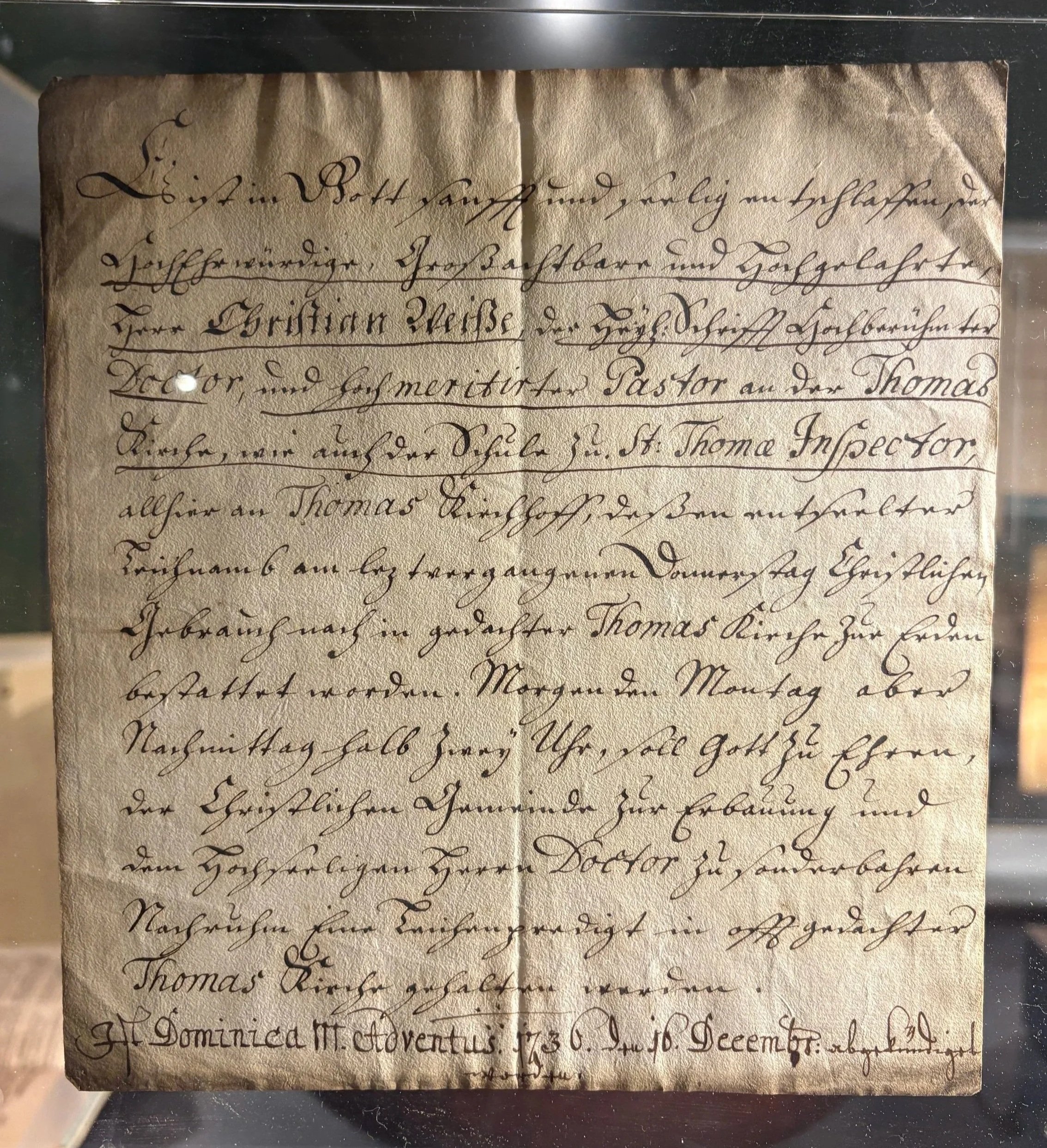
A little farther on was another document, pressed between two sheets of acrylic.
Again I asked.
Again ChatGPT answered.
It explained that this was a handwritten church announcement from the early eighteenth century, written in German Kurrent script. It identified the deceased as Christian Weise — or more accurately, probably Christian Weiß — the senior pastor of St. Thomas Church and inspector of the St. Thomas School.
It announced the funeral arrangements, noting that the funeral sermon would be held at St. Thomas Church and inviting the congregation to attend. The notice was dated the Third Sunday of Advent in 1736.
It then told me
“At first glance, the name looks like Christian Weise, but the famous Leipzig pastor associated with St. Thomas at this time was actually Christian Weiß (or Weiss) (1671–1736). The spelling in these old manuscripts often varies, and ‘Weisse/Weiße/Weiß’ were used interchangeably.
So what you’re looking at is essentially an original funeral announcement for the senior pastor of St. Thomas Church, issued in 1736.
This makes the document particularly significant because Johann Sebastian Bach was serving as cantor of St. Thomas Church in 1736. Bach would almost certainly have known Pastor Christian Weiß personally and may well have directed the music at the funeral announced in this very notice.
You’re not just looking at an old piece of handwriting—you’re looking at a document from the same church, during Bach’s lifetime, announcing the funeral of one of his closest ecclesiastical colleagues.”
What would otherwise have been an indecipherable piece of faded handwriting behind glass suddenly became a human story.
We ended up spending almost an hour inside that relatively small church and museum. Of course, we also bought the obligatory souvenirs from the shop before leaving.
That single hour alone already made this stop in Leipzig worthwhile.
The experience also had me thinking.
People often talk about AI replacing jobs. But sometimes they miss a more interesting question: what kinds of experiences does AI make possible that simply weren’t possible before?
This wasn’t about asking AI to write an email or summarize a document.
Instead, AI was our art historian, translator, tour guide, musicologist, architectural expert, and local historian, all within the span of an hour.
We didn’t have to book a guided tour. We didn’t need to search for anything online. We didn’t even know enough to ask the right questions beforehand. We simply looked at whatever caught our attention and asked, “What is this?”
Now, I don’t think that traditional guided tours are necessarily going to disappear. The best guides do much more than recite facts. They tell stories, answer unexpected questions, read the room, and they are able to share something AI can't: their own passion for a place.
Still, for independent travelers like me today, AI can also become an extraordinary companion. It gives context on demand. It satisfies curiosity immediately. It allows me to wander without an itinerary because I know that whenever something catches my eye, there’s someone — or rather, something — I can ask.
Standing in a fifteenth-century church, reading a funeral announcement from 1736 and learning about the people who lived there nearly three hundred years ago, I wasn’t experiencing less history because AI was involved.
I felt like I was experiencing more because my understanding was being deepened by technology sitting quietly in my pocket — technology that’s now available to almost anyone.
This 21st century technology is able to make the past feel more present.
It’s something that I want to think about some more, and will probably write about in a later post. For now, it just feels like there’s something weird and wonderfully ironic about that.